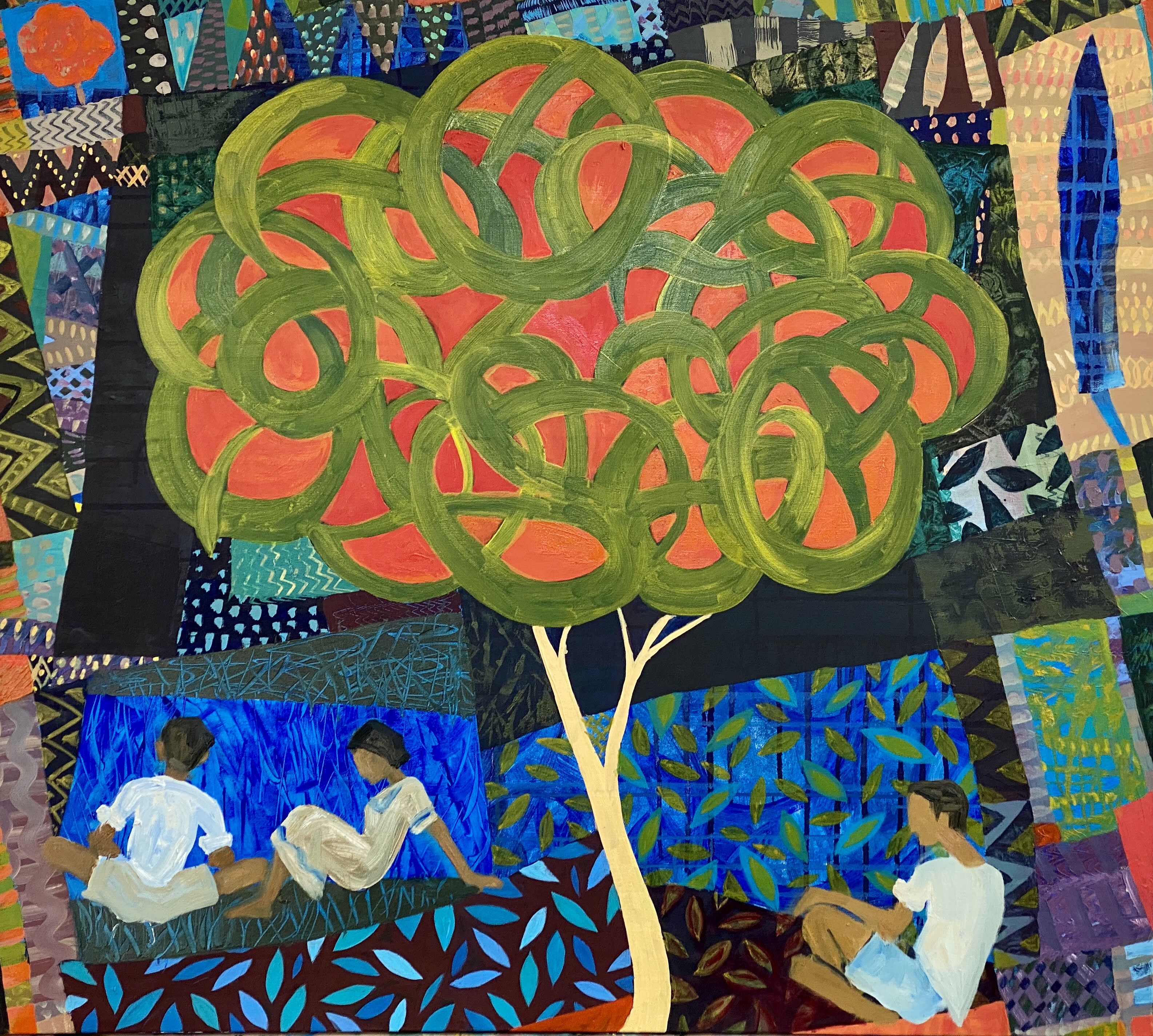
The last painting of 5780. Oil on canvas 90 x 100 cm.
The last painting of 5780. Oil on canvas 90 x 100 cm.
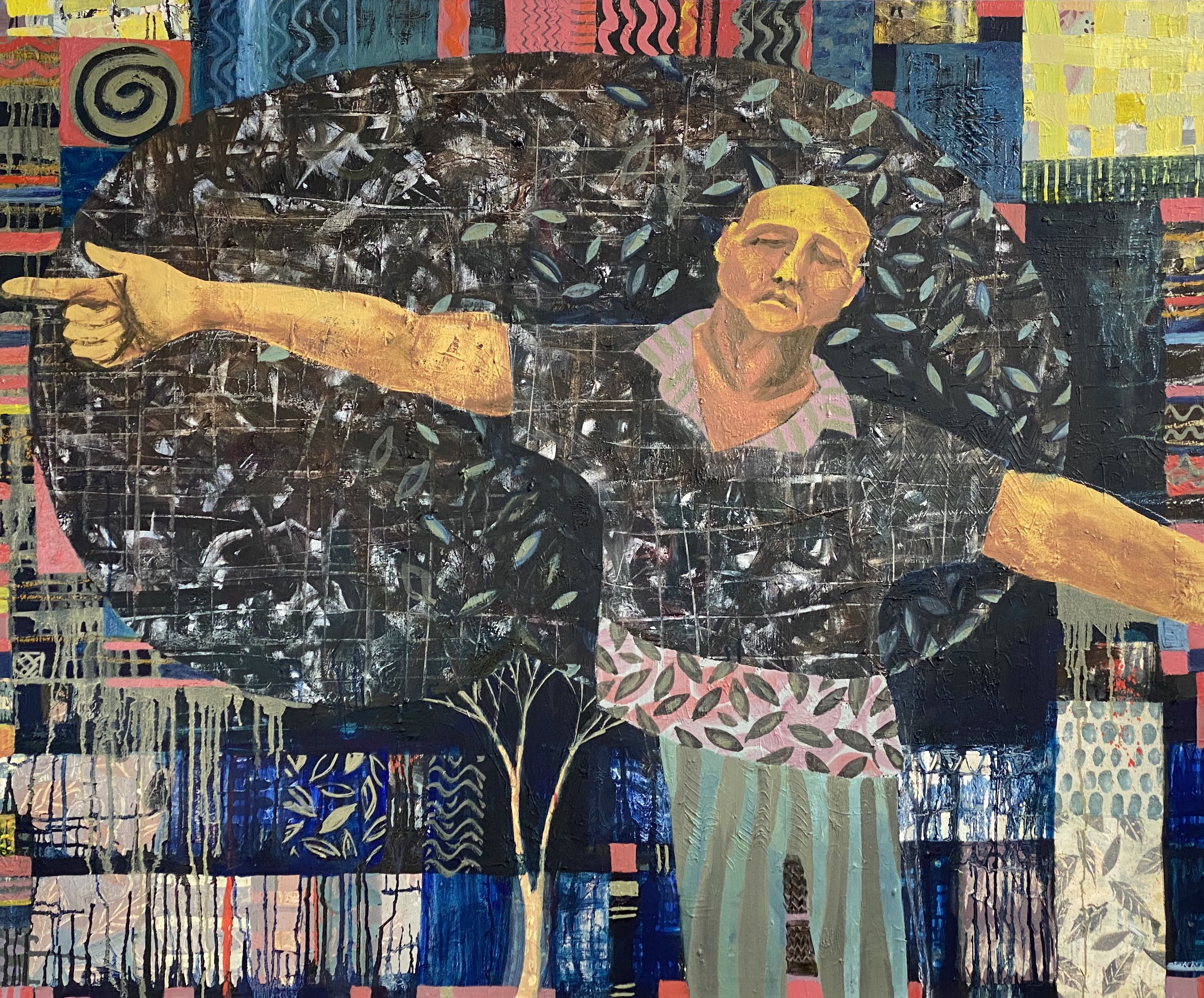
I’m Flying Like an Airplane 2020. Oil on canvas 100×110 cm.
אני טס כמטוס 2020
I worked and reworked this canvas for years. It began with a plan to create a painting entirely in shades of white. Soon a tree entered. Followed by yellows and my beloved weird greenish “dark yellows” joined. (They arecreated by adding a drop of black into various lemons and flame colors.
My sleeping pilot made his landing last week.
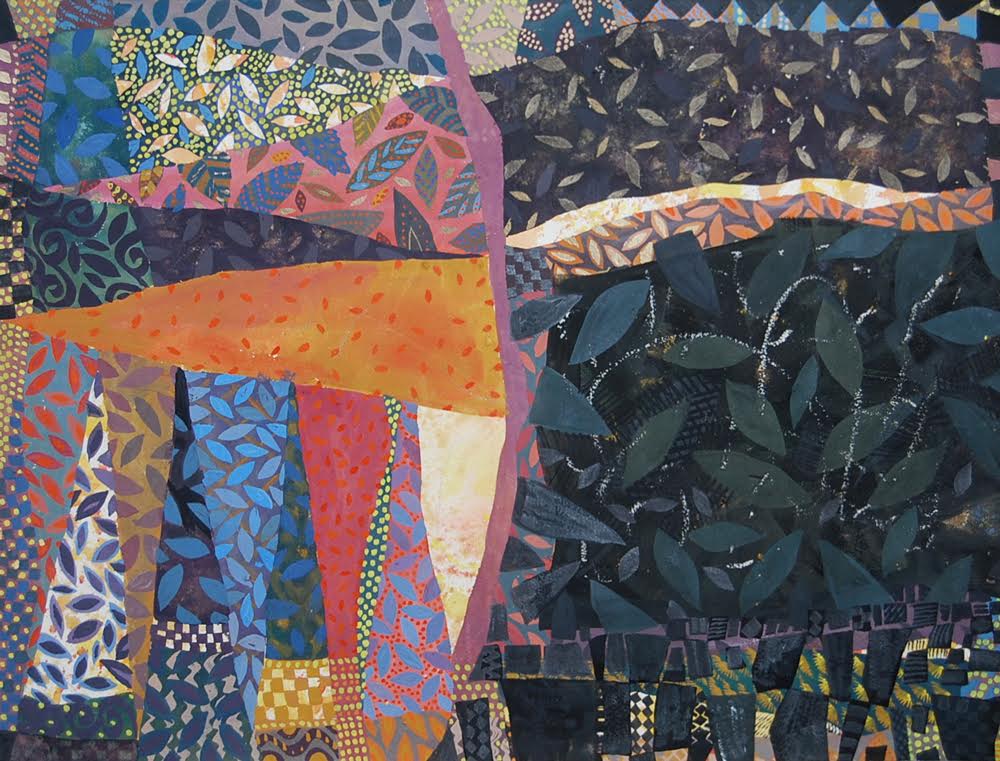
Thirty Triangles. Gouache, 46 x 61 cm. (18″ x 24″)
שלושים משולשים, 2017. גואש 46 * 61
Inspired by the “Crazy Quilts” traditionally made by African American women.
The composition, with its two, not quite balanced halves and with arrows pointing all over, defies all logic. But it works.

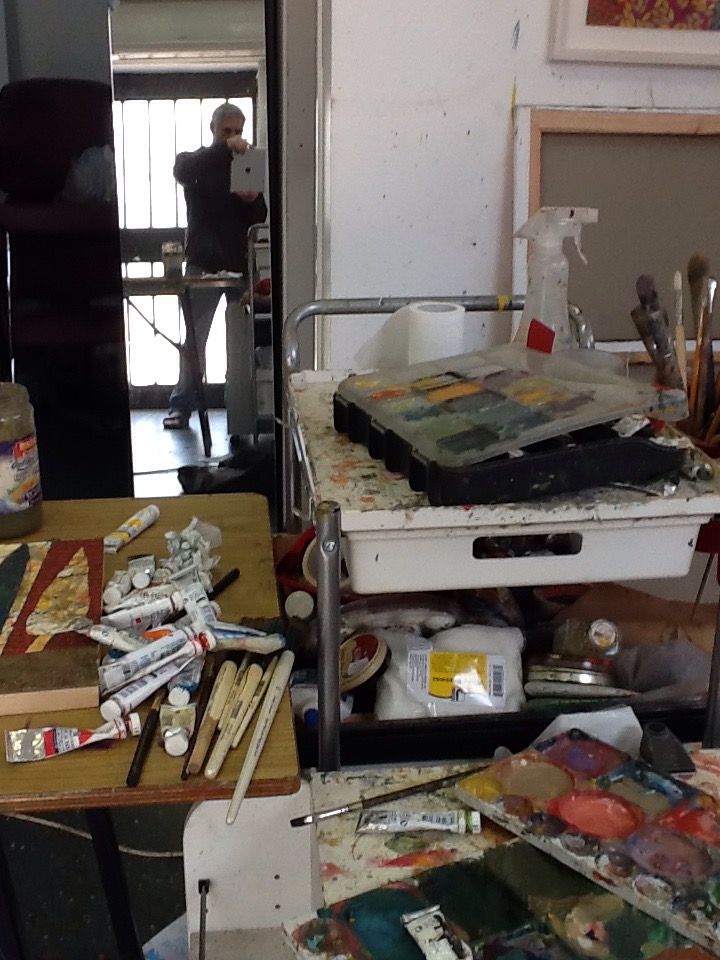

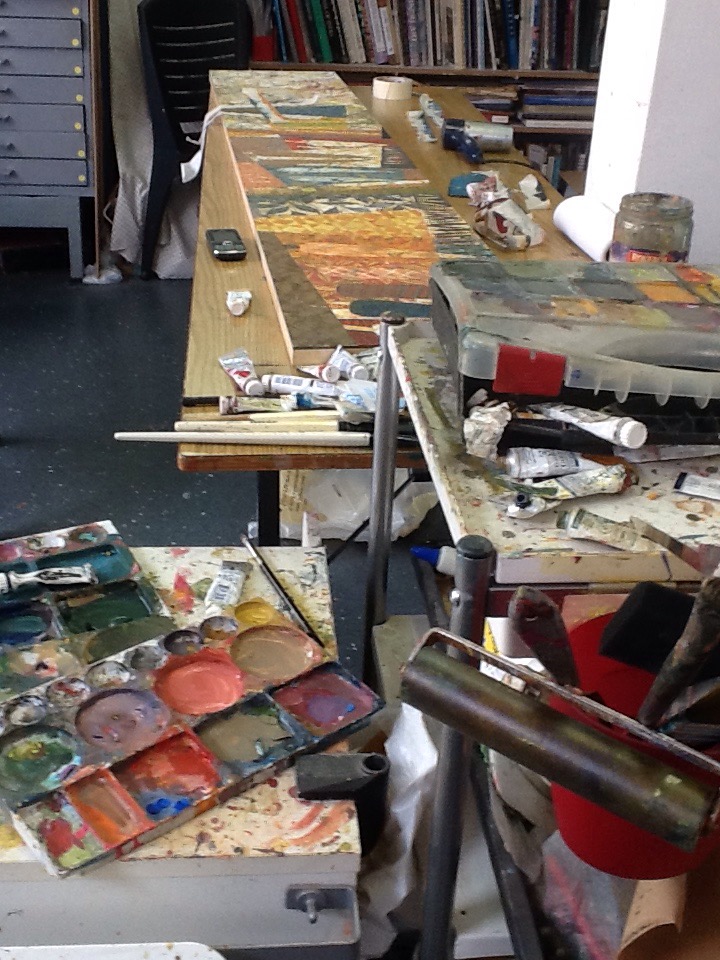
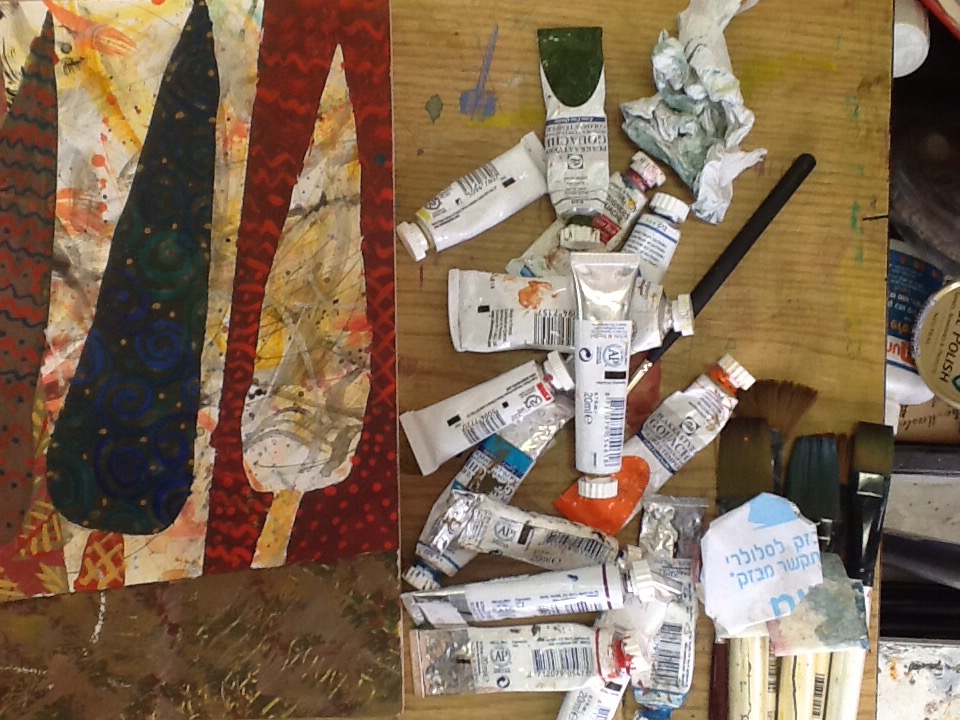
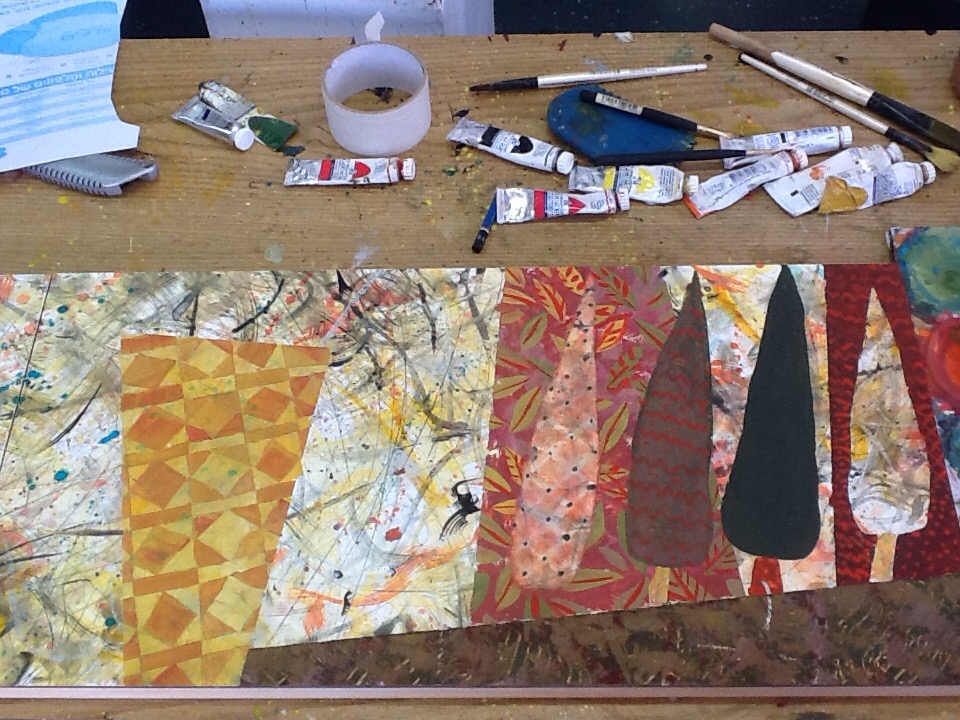

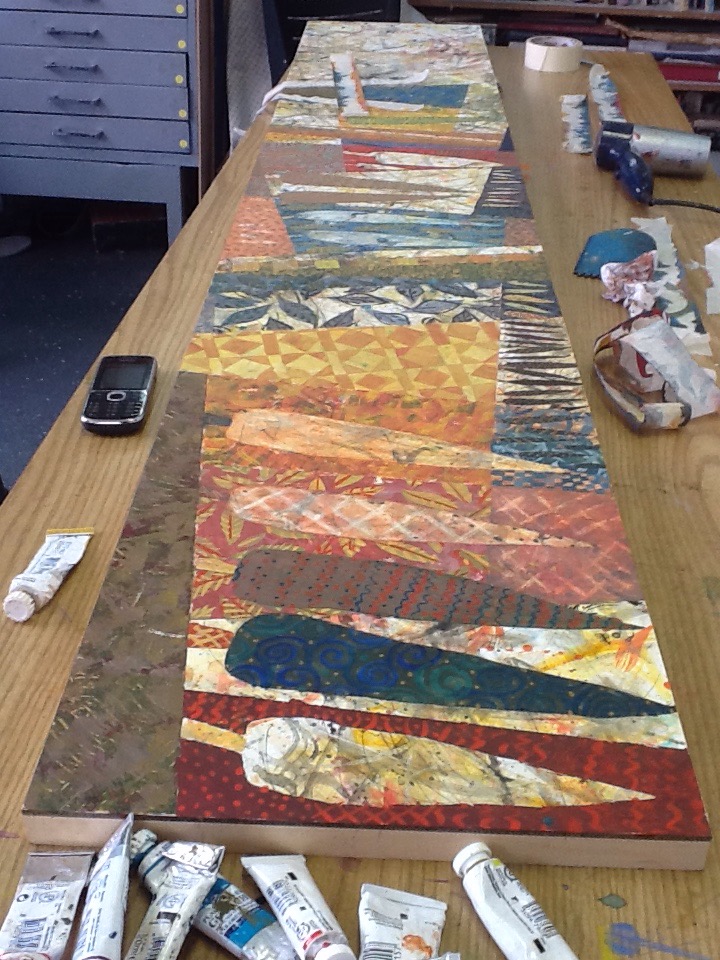
A peek at my painting process. Early May, 2013.
Pencil and ink, then gouache, on 3 “Claybord” panels. (Wood, coated with white clay.) 30 x 135 cm.
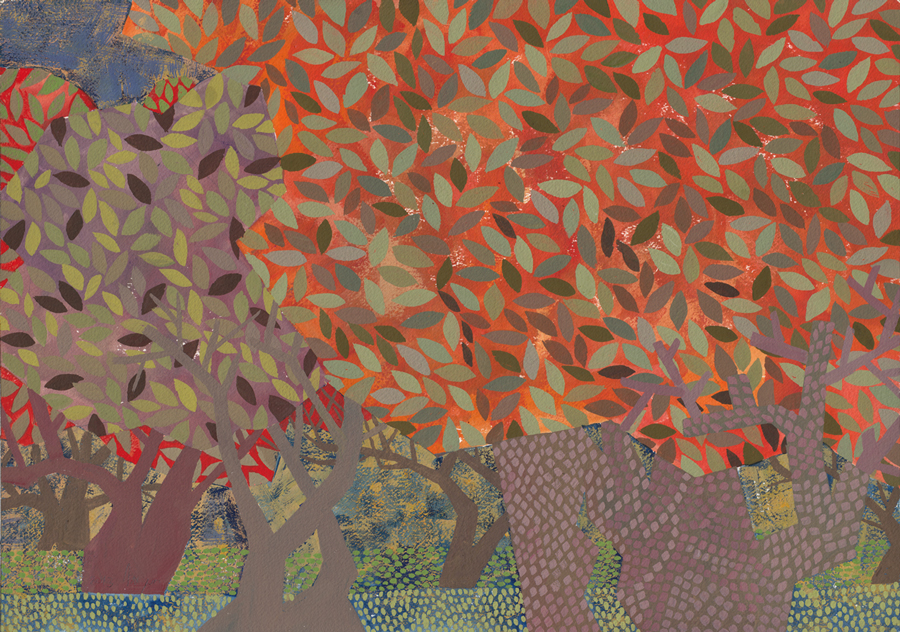
מטע זיתים #2 2013, גואש
Gouache 36 x 51
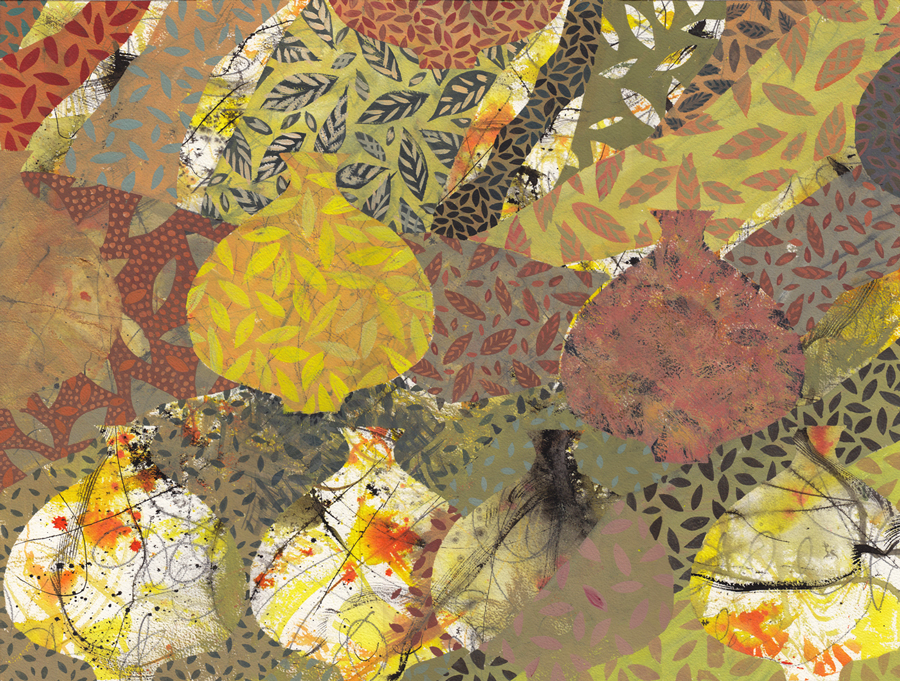
I pulled this out of my drawing cabinet, to show various brush and layering techniques to the students in my Diving into Color workshop. And then decided that it merits scanning. Not bad, huh?
Aah. I would love to teach a week long workshop in a vacation setting. Maybe in some old European farm. I get as much pleasure from seeing students eyes light up and think, “I CREATED THAT???!!!” as I get from painting myself.
.
I keep on finding new ways to approach the challenge of turning a lovely mess, into a non-functioning painting, and then to restore its dignity and intellect.
If only the real world was this simple.
כל פעם אני מוציא מסלול חדש בדרך לאתגר: להפוך בלאגן חינני ויפהפה, לציור לא מתפקד. ואז להחזיר לציור הנכשל את הכבוד, עצילות ותבונה
הלוואי שהיה כל כך פשוט לעשות כך העולם האמת
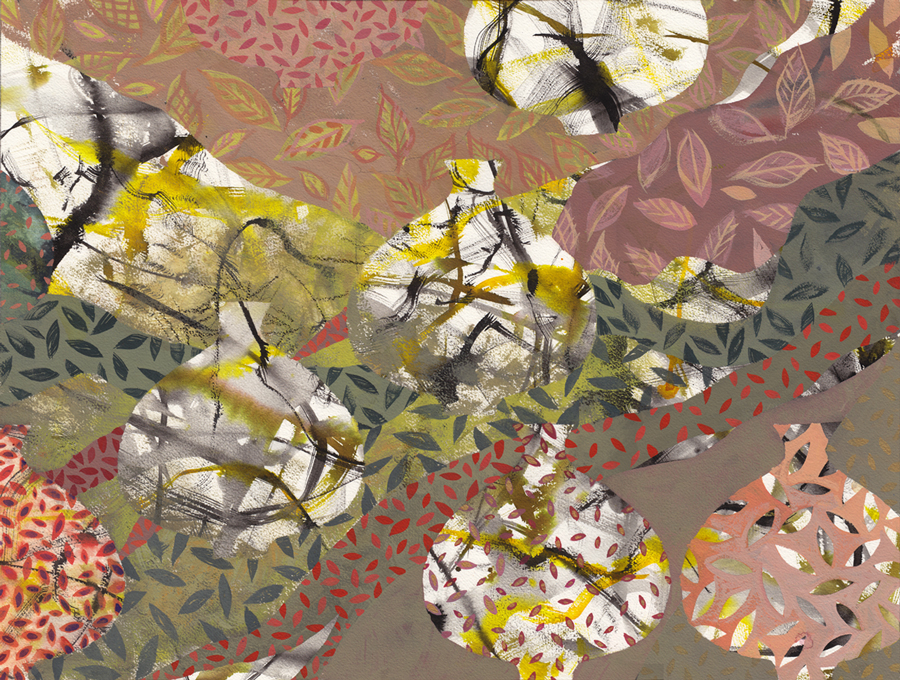
8 Persian Flasks, Feb 2015. Gouache and ink on paper, 46 x 61 cm
שמונה בקבוקים פרסיים, פברואר 2015ץ גואש ודיו על נייר 46 * 61 ס”מ
One more in the series, this one being particularly challenging.
I often tell my students that simplicity is important: When challenging the viewer with something confusing, they must limit additional stimuli.
The way that Braque and Picasso used restricted, neutral palettes for their Cubist still lives.
And as in cooking: Best not to use every spice in the kitchen, in each dish. Choose your direction, and emphasize it alone.
Good advice that I chose not to follow.
I did not to practice what I preach, in order to stretch my abilities to a new limit. I wanted to see how much chaos can still be contained in a viable composition and in a pretty, pleasant painting.
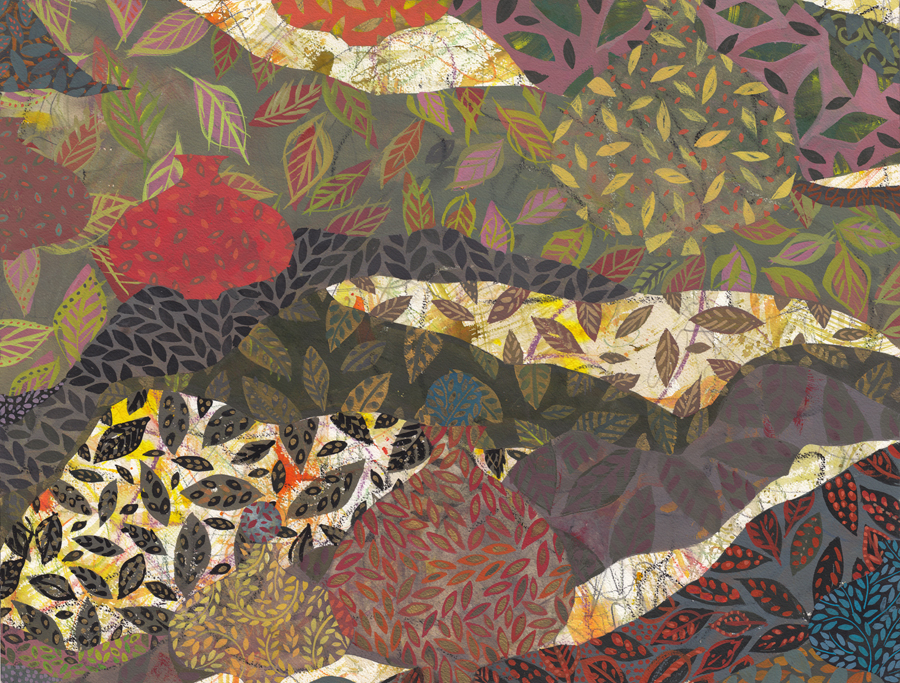
Seven Persian Flasks, 2015. Gouache and ink on Arches paper, 46 x 61 cm.
שבעה בקבוקים פרסיים, 2015. גואש ודיו על נייר 46 * 61 ס”מ
This series has been most interesting to create. As I wrote earlier, each painting begins with a chaotic splash of ink. I am often content with it at this stage, as is. But Jackson Pollack passed away long ago. Therefor I work hard to bring this joyful mess, into a polite conversation with the billowing curtains of pattern.
These Oriental bottles confuse and entertain the eye. Sometimes they appear in the painting – and sometimes are camouflaged, playing hide and seek.
And I wonder… does this series, with its Middle Eastern name and imagery, have any deeper political and cultural significance?

Cypresses in a Red Field, Gouache, Jan 2014
I completely forgot that I had painted this last January.
I must have been playing with my old positive/negative reversal toy, after giving that assignment to an art class.
עבודה נשכחה, מלפני שנה. גואש.
חזרתי לשחק בצעצוע היישן של פיטיב/נגטיב, אולי לאחר שנתתי את התרגיל הזה לתלמידים
When I hear the protest “But I don’t know how to draw!” I hand students scrap paper and scissors and tell them to cut simple stencils. That way we get past their childhood comparisons to the project of the kid sitting next to them in art class, and begin learning about painting!
The second secret is in the mess: To free the the class up for experimentation, I put on some crazy music, and tell them to to attack the page with paint, while moving with the rhythm. Working standing up, with the weaker hand helps too. Once that undercoat is happy and uninhibited, we begin to work with the stencils.
My students’ results are often better than my own work! I certainly learn a lot from them.
 Chanan Mazal | Israeli Artist